
Solomon Islands

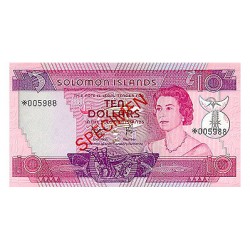
1977 - Solomon Islands 10 Dollars banknote PIC 7bs UNC
This Solomon Islands 10 Dollars banknote is associated with 1977 and identified in the shop referenc..
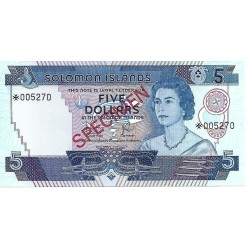
1977 - Solomon Islands 5 Dollars banknote PIC 6s UNC
This Solomon Islands 5 dollars banknote is associated with 1977 and catalogued as Pick P6s. The cata..
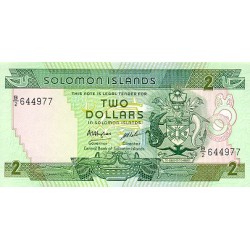
1986 - Solomon Islands 2 Dollars banknote PIC 13a UNC
This individual Solomon Islands 2 Dollars banknote is associated with 1986 and is catalogued as Pick..
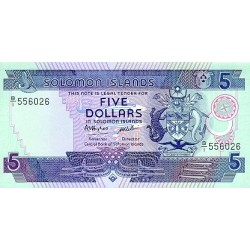
1986 - Solomon Islands 5 Dollars banknote PIC 14 UNC
This Solomon Islands 5 Dollars banknote is associated with 1986 and catalogued as Pick P14. The note..
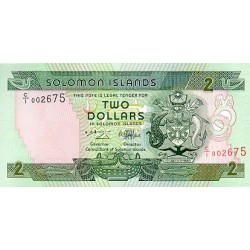
1997 - Solomon Islands 2 Dollars banknote PIC 18 UNC
This Solomon Islands 2 Dollars banknote is catalogued as Pick P18, with 1997 shown in the catalogue ..
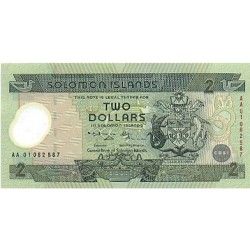
2001 - Solomon Islands 2 Dollars banknote PIC 23 UNC
This individual Solomon Islands 2 Dollars banknote is catalogued as Pick P23 and associated with 200..
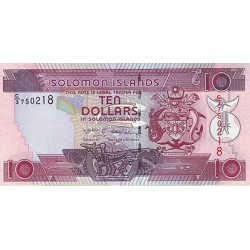
2006 - Solomon Islands 10 Dollars banknote PIC 27 UNC
This individual Solomon Islands banknote has a denomination of 10 Dollars and is associated with 200..
Frequently asked questions
Which periods and denominations are represented in the Solomon Islands banknote catalog?
The Solomon Islands catalog includes banknotes dated from 1977 to 2006. The denominations represented are 2 dollars, 5 dollars and 10 dollars. This selection includes examples from 1977, 1986, 1997, 2001 and 2006, providing a useful view of several catalogued issues across different periods. It describes the notes represented in this shop’s catalog, rather than every Solomon Islands banknote ever issued.
Which Pick references can be found for Solomon Islands banknotes?
The catalog identifies Solomon Islands notes with several Pick references, including P6s, P7bs, P13a, P14, P18, P23 and P27. These references cover the 2-dollar, 5-dollar and 10-dollar denominations represented in the selection. Pick numbers are useful for organizing a collection and distinguishing catalogued types, especially when notes share a denomination but belong to different dated issues or listed variants.
How can I identify a Solomon Islands banknote listed in this catalog?
Start by checking the denomination and date shown in the listing title, then compare the Pick reference. For example, the catalog distinguishes references such as P13a, P18 and P23 for 2-dollar notes, while P6s and P14 identify 5-dollar examples. The 10-dollar notes are listed with P7bs and P27. This combination of denomination, date and Pick reference provides a practical way to separate the catalogued notes.
What details should collectors record when cataloguing these Solomon Islands notes?
For each Solomon Islands banknote, record the denomination, date, Pick reference and any variant suffix shown in the catalog, such as the “a,” “b,” or “s” in references including P13a, P7bs and P6s. It is also useful to preserve the condition designation appearing in the listing. The supplied records use “UNC,” so that designation can be included when documenting the corresponding catalog item.
What should I check before buying a Solomon Islands banknote from the shop?
Before buying, compare the listing’s denomination, date and Pick reference with the note you want. Pay particular attention to suffixes such as P13a, P7bs or P6s, since these identify the specific catalogued reference. Also check the condition designation shown in the title; the Solomon Islands listings supplied here are marked UNC. Confirming these details helps ensure that the selected item matches the intended type in your collection.
Are 2-dollar Solomon Islands notes represented across several different dated issues?
Yes. The catalog represents Solomon Islands 2-dollar notes dated 1986, 1997 and 2001, identified by Pick references P13a, P18 and P23 respectively. This makes the 2-dollar denomination a useful group for comparing dated issues and catalog references within the shop’s selection. The catalog also includes 5-dollar and 10-dollar notes, but the 2-dollar entries show the clearest spread across the represented periods.