
Austria

Austria Banknotes
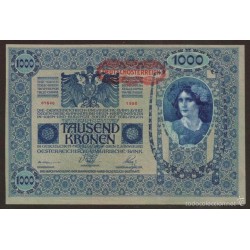
1902 - Austria PIC 60 1000 Krone Banknote
This individual Austrian banknote is denominated at 1000 Kronen and is associated with the 1902 seri..
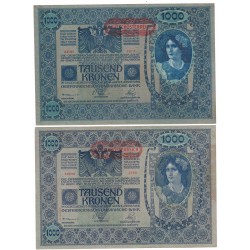
1902 - Austria PIC 60 1000 Krone Banknote XF
This individual Austrian banknote is a 1,000 Kronen denomination associated with 1902. It is identif..
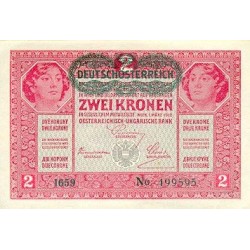
1917 - Austria P50 2 Kronen banknote
This individual banknote is a 2 Kronen note from Austria, associated with 1917 and identified as Pic..
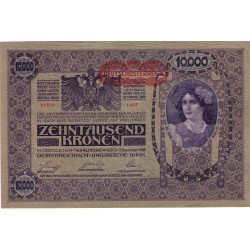
1918 - Austria P64 10,000 Kronen banknote
Austria 10,000 Kronen banknote associated with 1918, catalogued as Austria PIC 64. The supplied prod..
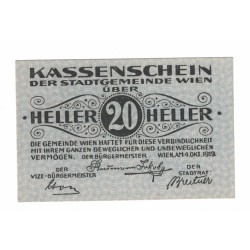
1919 - Austria B 20 Heller banknote
Austria 20 Heller banknote associated with 1919. The denomination is stated in Heller, and the suppl..
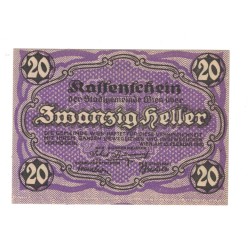
1919 - Austria C 20 Heller banknote
This individual banknote is associated with Austria and the year 1919. It has a denomination of 20 H..
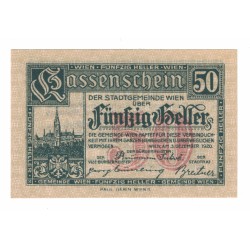
1919 - Austria D 50 Heller banknote
This individual banknote is from Austria and has a denomination of 50 Heller. The product is associa..
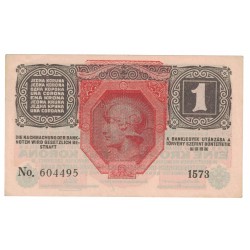
1919 - Austria P49 1 Krone banknote
Austria 1 Kronen banknote, catalogued as Austria PIC 49 and associated with 1919. The supplied produ..
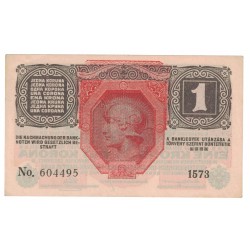
1919 - Austria P49 1 Krone banknote F
Austria 1 Krone banknote associated with 1919, identified as Pick 49. The supplied product data desc..
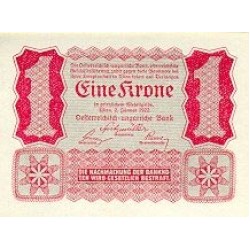
1922 - Austria PIC 73 1 Krone Banknote
This Austrian banknote is a 1 Kronen denomination associated with 1922 and identified by the Pick 73..
Frequently asked questions
What periods and currencies are represented in the Austria banknote catalog?
This shop’s Austria catalog covers dated issues from 1902 through 1986. The represented currencies include Heller, Krone or Kronen, and Shillings. Earlier material includes 20 and 50 Heller notes and several Kronen denominations, while later records include Shilling issues dated 1945, 1967, 1969, 1970, and 1986. This range describes the shop’s catalog rather than every banknote issued for Austria.
Which Austrian denominations and catalog groups are represented?
The catalog includes denominations from 20 Heller through 10,000 Kronen, as well as 20, 50, and 100 Shillings. A notable group is the 1922 Kronen series: P73 is 1 Krone, P74 is 2 Kronen, P75 is 10 Kronen, P76 is 20 Kronen, and P77 is 100 Kronen. Other represented references include P49, P50, P60, P64, P114, P142a, P144, P145, P148, and P149.
How can I identify an Austria banknote using its Pick reference?
Match the note’s denomination and stated series year with the Pick number shown in the listing. For example, P49 identifies the 1919 1 Krone issue, while P73 identifies the 1922 1 Krone issue. Likewise, P142a identifies a 1967 20 Shillings note, whereas P148 identifies a 1986 20 Shillings note. Lettered references B, C, and D are also used in this catalog for selected Heller notes.
Why does the same Austrian Pick number appear with different grade labels?
Some references are represented with more than one condition designation. P148, the 1986 20 Shillings note, appears with VF and XF labels, while P145, the 1969 100 Shillings note, appears with F and VF labels. P142a and P75 also have condition-specific records. When comparing notes, check the complete title and model rather than relying only on the Pick number, because the reference identifies the issue while the grade label distinguishes condition.
What should a buyer check before choosing an Austrian banknote?
Check the country, denomination, currency, series year, Pick or other catalog reference, and any grade stated in the title or model. This is especially useful where the same denomination appears in different periods or the same reference is represented in different grades. Several records also state that product images are reference images and that the serial number shown will not match the note ordered, so the pictured serial number should not be treated as an identifying feature.
What identifying features are recorded for Austria P64?
Austria P64 is cataloged as a 10,000 Kronen regular issue associated with the Austro-Hungarian Bank and a first issue year of 1918. Its recorded design uses purple, with German text and a woman’s portrait on the front. A red “DEUTSCHOSTERREICH” overprint is specified. The back is described with a woman’s portrait inside circles at left and right, together with centrally placed numerical values at the top and bottom.