
1968/69 - Biafra 5 Shillings banknote PIC 3a
1968/69 - Biafra 5 Shillings banknote PIC 3a 

1968/69 - Biafra 5 Shillings banknote PIC 3a

  • Product Code: Biafra PIC 3a
  • Availability: In Stock
  • 38.50€

  • Ex Tax: 35.00€


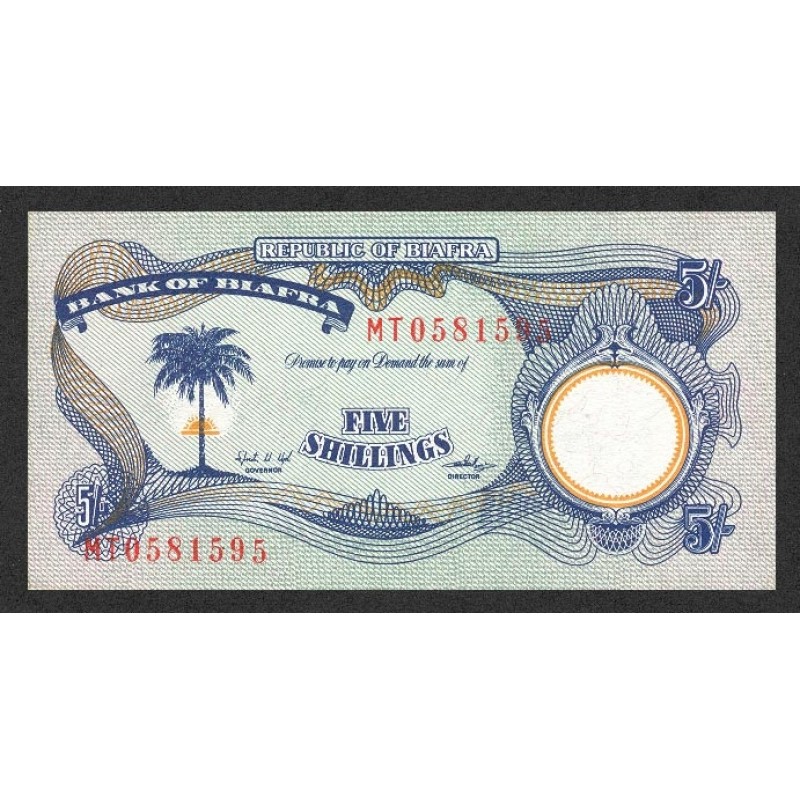
This Biafra 5 Shillings banknote is catalogued as Pick P3a and associated with the ND (1968–69) period. It is the issued-note variety, distinguished in the catalogue from the related version without a serial number.

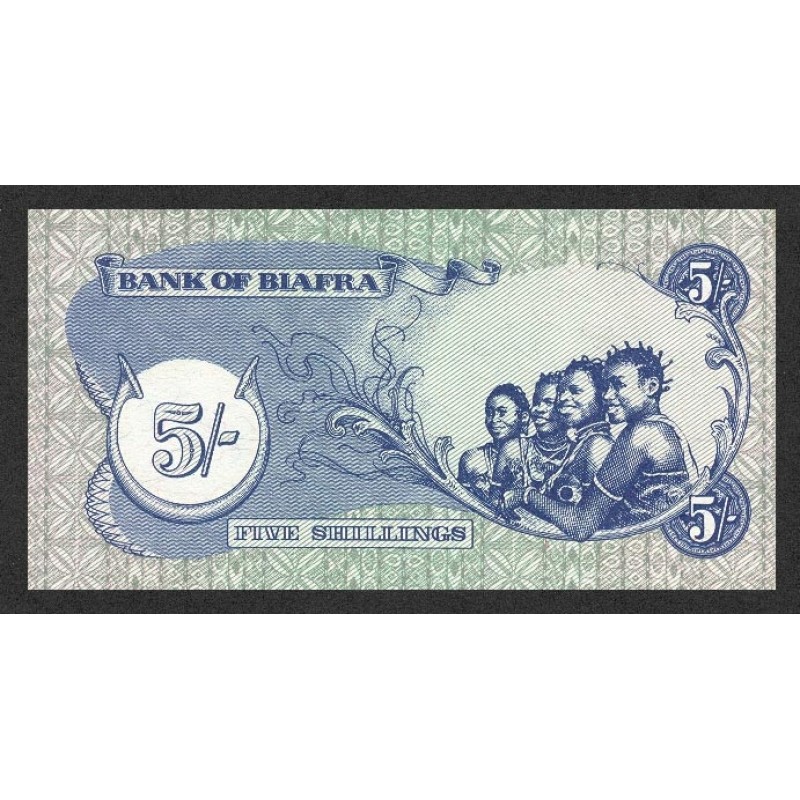
The face features blue printing over a green and orange underprint, with a palm tree and a small rising sun positioned towards the upper left-centre. The reverse shows four girls at the right. These design details provide useful identifiers for the Biafra Pick 3a reference.

There are no reviews for this product.

Write a review

Note: HTML is not translated!
Bad           Good
Captcha

Tags: Year 1968, Year 1969,


Frequently asked questions

What banknote does this listing represent?

This listing represents a Biafra 5 Shillings banknote identified as PIC 3a. The title and description both associate the product with Biafra, while the description gives the Pick identification as Biafra PIC 3a.

What date, denomination and currency information is provided?

The banknote is associated with 1968/69, with the separate tags showing 1968 and 1969. The title identifies the denomination as 5 Shillings, while the existing description identifies the currency as Pound. The listing does not state that 1968/69 is specifically an issue or printing date.

What is the catalog reference for this banknote?

The stated catalog reference is Biafra PIC 3a. This is the product’s explicit Pick reference and should be used to distinguish the listed banknote from other Biafra notes or other catalog entries.

What should collectors know about the product images and serial number?

The description states that the images shown are product references in the case of Uncirculated banknotes. It also explains that the serial number shown in the images will not correspond to the banknote ordered. The listing identifies the issue type as a regular issue.