
Peru

The Nuevo Sol (Spanish pronunciation: [ˈnweβo ˈsol], (new sun) plural: Nuevos Soles; currency sign: S/.) is the currency of Peru. It is subdivided into 100 cents, called céntimos in Spanish.
The ISO 4217 currency code is PEN. It is most commonly referred to just as Sol.The name is a return to that of Peru's historic currency, as the Sol was in use from the 19th century to 1985. Although the derivation of Sol is the Latin solidus, the word also happens to mean sun in Spanish.
There is a continuity therefore with the old Peruvian inti, which was named after Inti, the Sun God of the Incas.
Source: Wikipedia
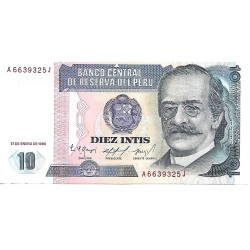
1986 - Peru 10 Intis banknote PIC 128 XF
Peru 10 Intis banknote associated with 1986, listed in the Pick catalogue as P128. The catalogue ent..
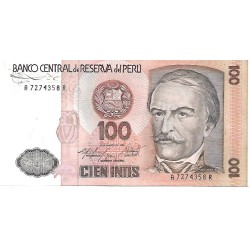
1986 - Peru 100 Intis banknote PIC 132b UNC
This UNC Peru 100 Intis banknote is associated with 1986 and catalogued as Pick P132b. The note feat..
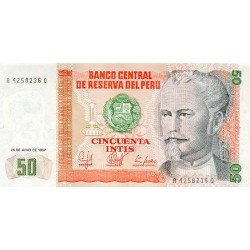
1986 - Peru PIC 131a 50 Intis banknote UNC
This individual Peru 50 Intis banknote is catalogued as Pick P131a and is associated with 1986. The ..
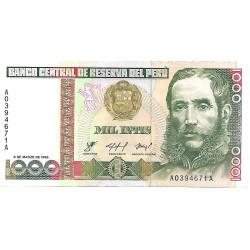
1986 - Peru PIC 136a 1000 Intis banknote UNC
Peru 1000 Intis banknote associated with 1986 and catalogued as Pick P136a. This UNC example corresp..
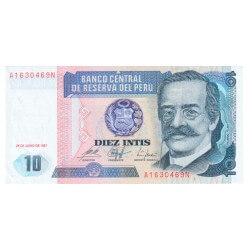
1987 - Peru PIC 129 10 Intis banknote UNC
This Peruvian 10 Intis banknote is associated with 26 June 1987 and is catalogued as Pick P129, also..
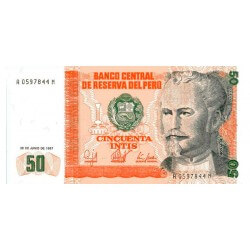
1987 - Peru PIC 131b 50 Intis banknote UNC
This individual Peru 50 Intis banknote is associated with 1987 and corresponds to Pick reference P13..
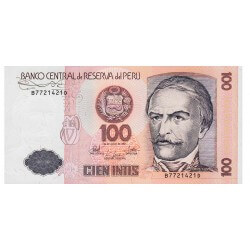
1987 - Peru PIC 133 100 Intis banknote UNC
This individual Peruvian 100 Intis banknote is associated with 1987 and catalogued as Pick P133 (Per..
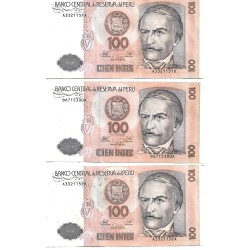
1987 - Peru PIC 133 100 Intis banknote VF
The banknote corresponds with the image Price per unit..
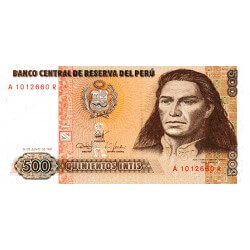
1987 - Peru PIC 134b 500 Intis banknote UNC
Peru 500 Intis banknote associated with 1987, catalogued as Pick P134b. This UNC example corresponds..
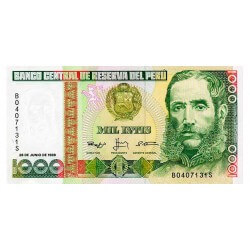
1988 - Peru PIC 136b 1000 Intis banknote UNC
This Peru 1000 Intis banknote is associated with 1988 and corresponds to Pick P136b, catalogue numbe..
Frequently asked questions
What periods and Peruvian currencies are represented in this shop’s catalog?
This Peru category spans dated banknotes from 1941 through 2005. The represented currency groups are Soles Oro, Intis, and New Soles or Nuevos Soles, following the wording used in individual product titles. Earlier catalog records include 1941 Soles Oro notes, while later listings include Intis from the 1980s and New Soles or Nuevos Soles from 2001, 2004, and 2005. This range describes the shop’s catalog rather than every banknote issued by Peru.
Which denominations appear among the Peru banknotes listed?
The Soles Oro group includes denominations from 5 and 10 through 50, 500, 1,000, 5,000, and 10,000 Soles Oro. Represented Intis denominations range from 10 and 50 to 100, 500, 1,000, 5,000, 10,000, 50,000, and 100,000 Intis. The later New Soles or Nuevos Soles records include 10 and 20. These denominations summarize the notes represented in this shop’s Peru catalog, not the complete denominational history of the country.
How can I identify a Peru banknote using the catalog information?
Start with the printed denomination and currency name, then compare the stated year and PIC reference in the product title or model field. For example, the catalog distinguishes 10 Soles Oro notes as PIC 84, PIC 100c, PIC 106, and PIC 112. Likewise, 50 Intis appears under PIC 131a and PIC 131b. Combining currency, denomination, date, and full reference is more precise than identifying a Peruvian note by denomination alone.
What do suffixes such as “a,” “b,” and “c” mean for identification in this category?
Letter suffixes form part of the catalog reference and should be retained when matching a note. The Peru listings include examples such as PIC 100c, 117c, 122a, 131a, 131b, 132b, 136a, 136b, 175a, 176b, and 179a. Notes with the same base number but different suffixes should not be treated as identical catalog entries. Compare the complete reference together with the year, denomination, currency name, and product image where supplied.
What details should a buyer compare before choosing a Peru banknote?
Compare the denomination, currency, date, complete PIC reference, stated grade, and product image or description. Grade labels represented in this catalog include UNC, XF, VF, and F. Some references also appear with different stated grades: PIC 84 is listed as both UNC and F, while PIC 106 appears as UNC and VF. Because denomination alone may not identify the precise note, verify any reference suffix and ensure that the title, model, grade, and image correspond to the item sought.
What notable denomination pattern appears among the Intis banknotes in the catalog?
The Intis group shows a broad progression of denominations across records dated 1986 to 1989. Examples include 10 Intis under PIC 128 and PIC 129, 50 Intis under PIC 131a and PIC 131b, and 100 Intis under PIC 132b and PIC 133. Higher denominations represented include 500, 1,000, 5,000, 10,000, 50,000, and 100,000 Intis. This is a notable collecting sequence within the shop’s Peru catalog, without implying rarity or completeness.