
Uruguay

Uruguayan peso has been a name of the Uruguayan currency since Uruguay's settlement by Europeans. The present currency, the peso uruguayo (ISO 4217 code: UYU) was adopted in 1993 and is subdivided into 100 centésimos.
In 1995-1996, banknotes in denominations of, 5, 10, 20, 50, 100, 200, 500 and 1000 pesos uruguayos were introduced, followed by 2000 pesos uruguayos in 2003. 5 and 10 notes have been replaced by coins in 2003.
Source: Wikipedia
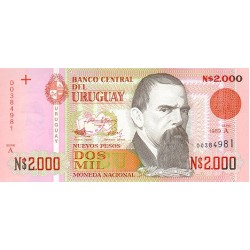
1989 - Uruguay 2000 Nuevos Pesos banknote PIC 68 UNC
This individual Uruguay 2000 Nuevos Pesos banknote is associated with 1989 and catalogued as Pick P6..
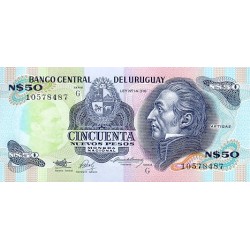
1989 - Uruguay 50 New Pesos banknote PIC 61A UNC
This Uruguay 50 New Pesos banknote is associated with 1989 and catalogued as Pick P61a. The note is ..
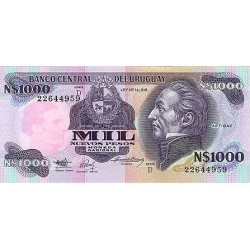
1992 - Uruguay 1000 Nuevos Pesos banknote PIC 64Ab UNC
This Uruguay 1000 Nuevos Pesos banknote is associated with 1992 and catalogued as Pick P64Ab. It bel..
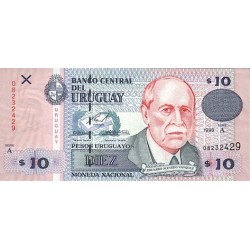
1998 - Uruguay 10 Pesos Uruguayos banknote PIC 81 UNC
This Uruguay 10 Pesos Uruguayos banknote is associated with 1998 and is catalogued as Pick P81. The ..
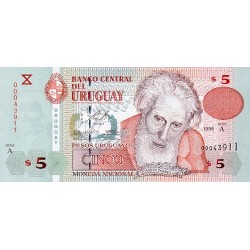
1998 - Uruguay 5 Pesos Uruguayos banknote PIC 80 UNC
This Uruguay 5 Pesos Uruguayos banknote is associated with 1998 and is catalogued as Uruguay PIC 80a..
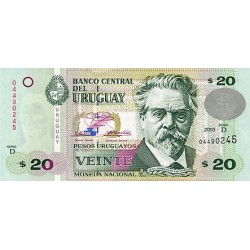
2000 - Uruguay 20 Pesos Uruguayos banknote PIC 83 UNC
This individual Uruguay 20 Pesos Uruguayos banknote is associated with 2000 and catalogued in the Kr..
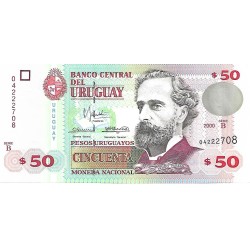
2000 - Uruguay 50 Pesos Uruguayos banknote PIC 75b UNC
This UNC banknote is a 50 Pesos Uruguayos issue from Uruguay, associated with the year 2000 and iden..
Frequently asked questions
What periods and denominations are represented in the Uruguay banknote catalog?
This shop’s Uruguay catalog includes banknotes dated from 1967 to 2000. The denominations represented range from 1 New Peso and 5 New Pesos to 5000 New Pesos, as well as 5, 10, 20 and 50 Pesos Uruguayos. Earlier entries include 50, 100 and 500 Pesos from 1967, while later entries include Pesos Uruguayos issues from 1998 and 2000. These examples represent selected catalog offerings, not every Uruguayan banknote issued.
Which Uruguayan currency names and catalog references can collectors find here?
The catalog includes issues labelled Pesos, New Pesos or Nuevos Pesos, and Pesos Uruguayos. Examples include Pick references P46, P47 and P48 for 1967 notes; P56, P57, P61A, P62A, P64Ab, P65a, P66 and P68 for New Pesos issues; and P75b, P80a, P81 and P83 for Pesos Uruguayos. These references are useful for organising a collection and distinguishing denominations, dates and listed varieties.
How can I identify a Uruguay banknote from this catalog?
Begin with the denomination and currency wording printed in the listing, then compare the stated year and Pick reference. For example, a 1989 50 New Pesos note is listed as P61A, while a 2000 20 Pesos Uruguayos note is listed as P83a. The catalog title also provides a condition abbreviation, such as UNC. Checking all of these details together helps separate notes with similar designs or related currency names.
What should I compare when distinguishing Uruguay banknote varieties?
Compare the full Pick reference rather than relying only on the denomination. The catalog includes references with letter or suffix distinctions, including P61A, P64Ab, P65a, P75b, P80a and P83a. The year, denomination and currency name provide additional identification points. For a careful comparison, match the reference shown in the product title with the note’s denomination and date, while recognising that this catalog represents selected examples rather than a complete listing of every variety.
What information is useful when choosing a Uruguay banknote for a collection?
A practical way to choose from this catalog is to decide whether you want a particular period, currency name, denomination or Pick reference. You can compare earlier Pesos and New Pesos entries with later Pesos Uruguayos notes, then check the year and condition notation in each listing. The catalog titles identify the notes as UNC, which is useful when defining a condition-focused collecting preference. Always verify the complete listing details before placing an order.
What collecting pattern stands out across the Uruguay catalog entries?
A notable pattern is the representation of changing currency labels across the dated entries. The catalog begins with Pesos examples from 1967, includes New Pesos and Nuevos Pesos notes dated from 1975 through 1992, and then shows Pesos Uruguayos entries dated 1998 and 2000. This progression gives collectors a structured way to group the shop’s Uruguay notes by the currency name used in each listing, alongside denomination, year and Pick reference.