
Myanmar
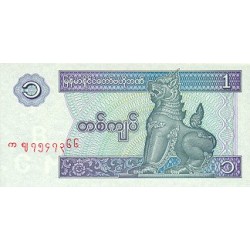
1996 - Myanmar PIC 69 1 Kyat banknote UNC
This individual Myanmar 1 Kyat banknote is catalogued as Pick P69. The catalogue entry records it as..
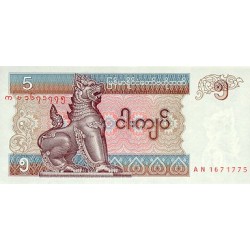
1997 - Myanmar PIC 70b 5 Kyats banknote UNC
This Myanmar 5 Kyats banknote is associated with 1997 and is identified as Pick P70b. The note is li..
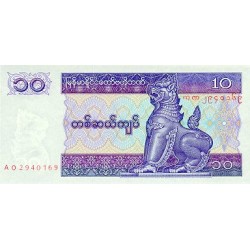
1997 - Myanmar PIC 71b 10 Kyats banknote UNC
This Myanmar 10 Kyats banknote is associated with 1997 and is catalogued as Pick P71b. The note is l..
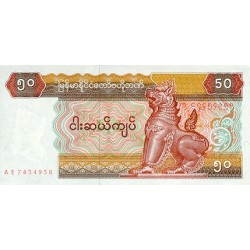
1997 - Myanmar PIC 73b 50 Kyats banknote UNC
Myanmar 50 Kyats banknote associated with 1997, catalogued as Pick P73b. This UNC example is identif..
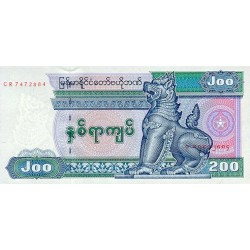
1998 - Myanmar PIC 75b 200 Kyats banknote UNC
Myanmar 200 Kyats banknote associated with 1998, catalogued as Pick P75b. This UNC example features ..
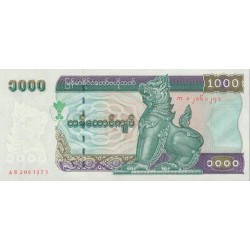
1998 - Myanmar PIC 77b 1000 Kyats banknote UNC
This individual banknote is from Myanmar and has a denomination of 1000 Kyats. The product is associ..
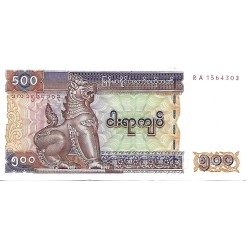
2004 - Myanmar PIC 79 500 Kyats banknote UNC
Myanmar 500 Kyats banknote, catalogued as Pick P79. The Krause reference records this type as ND wit..
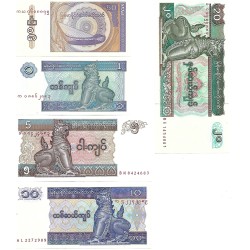
LOT Myanmar (PIC 68, PIC 69, PIC 70, PIC 71 and PIC 72) UNC
This Myanmar banknote lot comprises notes identified by the PIC 68, PIC 69, PIC 70, PIC 71 and PIC 7..
Frequently asked questions
What periods and currencies are represented in this Myanmar banknote category?
This shop’s Myanmar catalog spans dated issues from 1942 through 2004. The earlier Burma-labelled notes include cent and rupee denominations, while later records use pyas and kyats. Represented groups include 1942–1944 Burma issues, kyat notes dated from the 1950s through the 1980s, and Myanmar issues from the 1990s and 2004. The category reflects the shop’s catalog rather than every banknote issued for Myanmar or Burma.
Which denominations can collectors find represented in the Myanmar catalog?
The catalog includes low denominations such as 1, 5 and 10 cents, plus 1/4, 1/2, 1, 5, 10 and 100 rupees. Kyat-denominated listings range from 1 kyat through 1,000 kyats, with a 50-pyas note also represented. Notable denomination groups include 1, 5, 10 and 25 kyats from 1972–1973 and 50, 100, 200, 500 and 1,000 kyats from the 1990s.
How can I identify Myanmar banknotes by their catalog references?
Use the PIC or Pick reference together with the denomination and date shown in the listing. Examples include PIC 11a for the 1942 10-cent note, PIC 48a for the 1958 10-kyat note, PIC 64 for the 1987 45-kyat note and PIC 77b for the 1998 1,000-kyat note. Letter suffixes such as “a” and “b” form part of the listed reference, so they should not be omitted when matching a note.
Which listing details help distinguish condition and collecting variants?
Check the catalog reference, date, denomination, grade and any product-specific note. The Myanmar category uses grades including UNC, XF and VF. Some references appear in more than one listed grade: PIC 48a and PIC 51a are represented as both XF and VF, while PIC 67 and PIC 72 have UNC and XF listings. Certain descriptions also mention staples, and the XF listing for PIC 72 specifies cream paper. These details help separate otherwise similar catalog records.
What should a buyer check before choosing a Myanmar banknote?
Compare the title, model, catalog reference, denomination, date, grade and description on the individual product page. Many Myanmar and Burma listings state that their images are references and that the serial number supplied will differ from the pictured note. Other records explicitly say that the banknote corresponds with the image. Because image treatment varies by listing, the product-specific wording is important when deciding whether a particular note meets your collecting requirements.
Does the Myanmar category include unusual kyat denominations?
Yes. Alongside denominations such as 1, 5, 10, 20, 50, 100, 200, 500 and 1,000 kyats, the shop’s catalog represents several less regular values. These include the 1972 PIC 59 25-kyat note, the 1986 PIC 62 15-kyat note, the 1986 PIC 63 35-kyat note, the 1987 PIC 64 45-kyat note and the 1985 PIC 65 75-kyat note. They form a distinctive denomination-focused group within the catalog.