
Greece
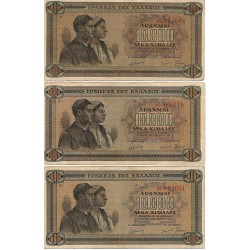
1942 - Greece PIC 120a 10.000 Drachmai banknote VF
Greece 10,000 Drachmai banknote associated with 1942, identified by the Pick catalogue reference PIC..
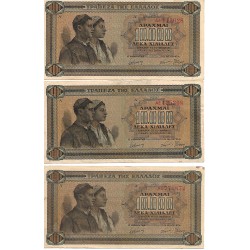
1942 - Greece PIC 120a 10.000 Drachmai banknote XF
This individual banknote is associated with Greece and the year 1942. It has a denomination of 10,00..
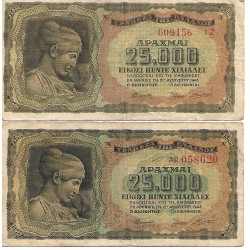
1943 - Greece PIC 123 25.000 Drachmai banknote F
This individual banknote from Greece has a denomination of 25,000 Drachmai and is associated with th..
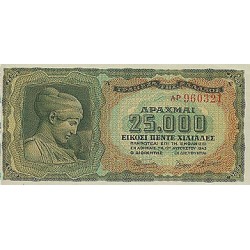
1943 - Greece PIC 123 25.000 Drachmai banknote UNC
Greece 25,000 Drachmai banknote associated with 1943, listed under the catalogue reference Grecia PI..
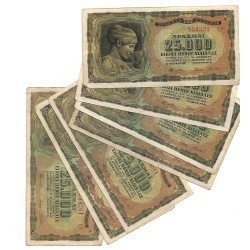
1943 - Greece PIC 123 25.000 Drachmai banknote VF
This individual banknote is from Greece and has a denomination of 25,000 Drachmai. The year associat..
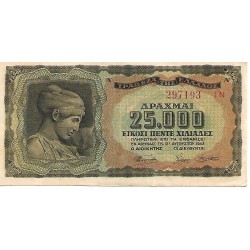
1943 - Greece PIC 123 25.000 Drachmai banknote XF
This individual banknote is from Greece and has a denomination of 25,000 Drachmai. The year 1943 is ..
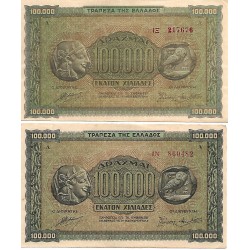
1944 - Greece PIC 125a 100.000 Drachmai banknote XF
This individual banknote is from Greece and has a denomination of 100,000 Drachmai. The product is a..
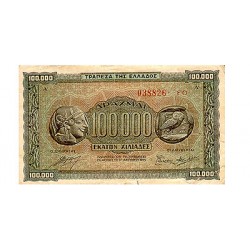
1944 - Greece PIC 125b 100.000 Drachmai banknote UNC
This individual banknote from Greece is denominated at 100,000 Drachmai and is associated with 1944...
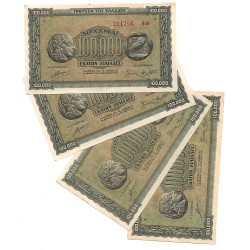
1944 - Greece PIC 125b 100.000 Drachmai banknote VF
This individual banknote is from Greece and has a denomination of 100,000 Drachmai. The product is a..
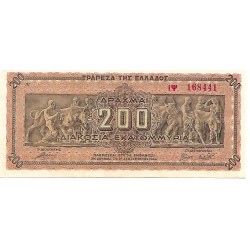
1944 - Greece PIC 131a 200 millions Drachmai banknote UNC
Greece 200 millions Drachmai banknote associated with 1944, identified by the catalogue reference PI..
Frequently asked questions
What periods and denominations are represented in this Greece banknote category?
This shop’s Greece catalog spans dated issues from 1939 through 1996. Represented denominations range from 10 drachmai to 200 million drachmai. The selection includes notes dated 1939–1950 as well as later examples from 1978, 1987 and 1996. Specific denominations include 10, 20, 50, 100, 200, 1,000, 5,000, 10,000, 25,000 and 100,000 drachmai, plus 200 million drachmai. This describes the scope of the shop catalog rather than every Greek banknote issued.
Which catalog-reference groups are notable among the Greek banknotes listed?
Several groups of Pick references appear in the Greece category. Earlier listings include P110, P118, P119a, P120a, P123, P125a, P125b and P131a. Another group includes P314, P315 and P324a, while later dated notes include P199a, P200a, P202a and P204a. The catalog also records P M6 for a 1941 1,000-drachmai note. These references help organize notes by catalog type and, where a suffix appears, by listed variety.
How can I identify a Greek banknote using the shop listings?
Begin by matching the printed denomination and the date stated in the listing, then compare the Pick reference. For example, the catalog associates a 1942 5,000-drachmai note with P119a, a 1943 25,000-drachmai note with P123, and a 1987 1,000-drachmai note with P202a. Because the same denomination can occur in different periods, denomination alone is not sufficient. The reference, date, denomination, listed grade and product image should be considered together when identifying a note.
What is the difference between references P125a and P125b?
The shop catalog treats P125a and P125b as separate varieties of the 1944 100,000-drachmai banknote. The suffix letters are therefore important identification details and should not be omitted when comparing listings. The supplied records do not specify the design or production feature that distinguishes the two varieties, so identification should rely on the full Pick reference and the product image rather than assumptions. Grade is separate from variety: the catalog shows P125a and P125b under different stated condition grades.
What should a buyer check before choosing a Greece banknote from this category?
Check the denomination, stated year, full Pick reference, grade and product image. Grades represented in the catalog include UNC, XF, VF and F, and the same reference may appear with more than one grade. Condition notes also matter: one P204a listing is explicitly described as “broken,” distinguishing it from the UNC example of that reference. Buyers should compare the precise title and image rather than relying only on denomination or date, especially where suffix varieties such as P125a and P125b are involved.
Why do some 1942–1944 Greece listings have very large drachmai denominations?
A notable pattern within this shop’s catalog is the progression of listed denominations across those dates. The 1942 records include 1,000, 5,000 and 10,000 drachmai; the 1943 listings include 25,000 drachmai; and the 1944 records include 100,000 drachmai and 200 million drachmai. These notes are identified by references including P118, P119a, P120a, P123, P125a, P125b and P131a. The catalog data establishes this denomination pattern but does not provide a historical explanation for it.