
Spain

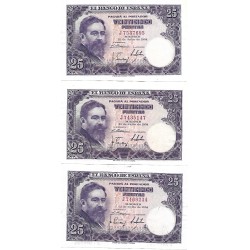
1954 - Spain PIC 147 25 pesetas XF
This individual banknote is from Spain and has a denomination of 25 pesetas. The product is associat..
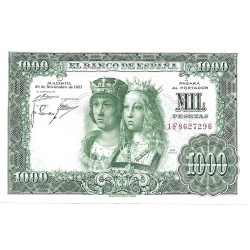
1957 - Spain PIC 149 1000 pesetas UNC
Individual banknote associated with Spain, the year 1957 and a denomination of 1,000 pesetas. The pr..
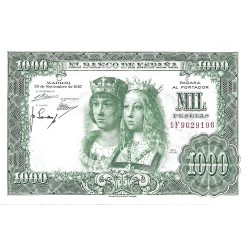
1957 - Spain PIC 149 1000 pesetas UNC-
This individual banknote is from Spain and has a denomination of 1,000 pesetas. The product data ass..
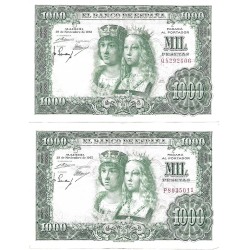
1957 - Spain PIC 149 1000 pesetas VF
Spanish banknote denominated at 1,000 pesetas and associated with 1957. The product title lists the ..
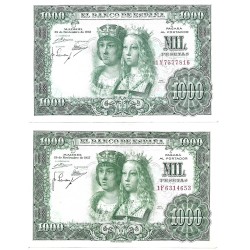
1957 - Spain PIC 149 1000 pesetas XF
This individual Spain 1000 pesetas banknote is associated with 1957 and is identified by the Pick re..
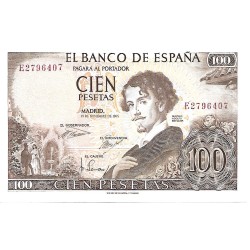
1965 - Spain PIC 150 100 pesetas UNC
Individual banknote from Spain, denominated at 100 pesetas and associated with 1965. The note is ide..
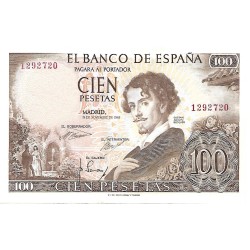
1965 - Spain PIC 150 100 pesetas UNC-
Spain 100 pesetas banknote associated with 1965. The product data identifies it with the PIC 150 and..
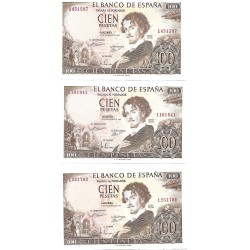
1965 - Spain PIC 150 100 pesetas XF
Spain 100 pesetas banknote associated with 1965. The supplied product data identifies this note with..
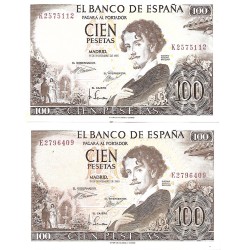
1965 - Spain PIC 150 100 pesetas XF
This individual banknote is from Spain and has a denomination of 100 pesetas. The product data assoc..
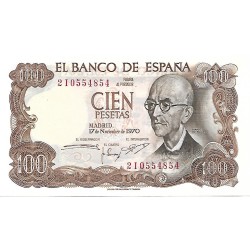
1970 - Spain PIC 152 100 pesetas UNC
Spain 100 pesetas banknote associated with 17 November 1970, catalogued as Pick P152. This UNC examp..
Frequently asked questions
What periods of Spanish banknotes are represented in this shop’s catalog?
This Spain category spans dated material from 1925 through 1992. It includes substantial groups from the late 1920s and 1930s, issues dated from the 1940s to the 1970s, and later peseta notes from 1979, 1980 and 1992. The catalog also includes a 1992 10 ECU fair banknote. This range describes the shop’s catalog rather than every banknote issued by Spain.
Which denominations can collectors explore in the Spain category?
The catalog includes Spanish notes denominated from 50 céntimos and 1 peseta through 2, 5, 10, 25, 50, 100, 200, 500, 1,000, 2,000 and 5,000 pesetas. Particularly recurring groups include 1- and 5-peseta notes from the 1940s and 1950s, 100-peseta issues across several decades, and 1,000-peseta notes dated from 1936 to 1992. These denominations reflect this shop’s catalog selection.
How can I identify a Spanish banknote using the catalog references?
Start with the printed denomination and date, then compare the Pick reference shown as “PIC” in the title. Examples include PIC 69 for the 1925 100 pesetas, PIC 74 for the 1928 25 pesetas, PIC 145 for the 1953 100 pesetas and PIC 158 for the 1979 1,000 pesetas. The model field also supplies a GU reference, such as GU 356 or GU 492, providing another way to distinguish cataloged types.
Why do series and no-series details matter when identifying Spain banknotes?
Some Spanish banknotes in this catalog are separated by series designation. The 1928 PIC 74 25 pesetas appears without a series and with Series A or B/E distinctions. The 1935 PIC 85 5 pesetas includes no-series, A/D and E/L groupings. Later examples include the 1979 PIC 157 500 pesetas and 1980 PIC 156 200 pesetas in both no-series and series forms. Check this field alongside date, denomination and reference.
What should a buyer check before choosing a Spain banknote listing?
Compare the date, denomination, Pick and GU references, series information and stated grade. The catalog uses English abbreviations such as UNC, UNC-, XF, VF, F, G and PR, while model fields may use corresponding Spanish abbreviations including S/C, EBC, MBC, BC, RC and MC. Many records state that the banknote corresponds to the image, so inspect the pictured note. Also note specifically disclosed features such as staples or consecutive numbering.
Are both individual Spanish banknotes and grouped lots represented?
Yes. Alongside individual notes, the Spain catalog includes grouped lots built around particular Pick types, dates, denominations or grades. Examples involve PIC 74, PIC 85, PIC 86, PIC 145, PIC 150 and PIC 152, as well as mixed-denomination selections and named groups such as Vascos Aldundia, Valdegovia and Amurrio. One PIC 152 lot is specifically described as consecutively numbered. Always read the lot title and description to understand its composition.