
Philippines

Philippines banknotes
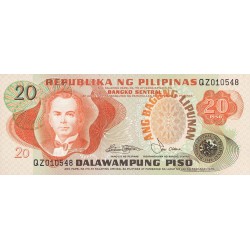
ND - Philippines PIC 162c 20 Piso banknote S10 UNC
This individual banknote is a 20 Piso note from the Philippines, listed as ND and identified by the ..
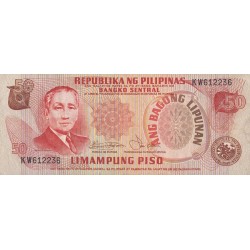
ND - Philippines PIC 163b 50 Piso banknote S9 UNC
This individual Philippines 50 Piso banknote is catalogued as ND under Pick P163b. The note features..
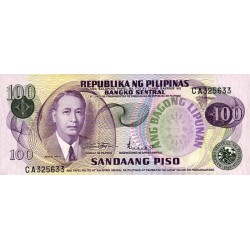
ND - Philippines PIC 164a 100 Piso banknote S8 UNC
Philippines 100 Piso banknote, listed as ND and identified by the Pick catalogue reference PIC 164a...
Frequently asked questions
What periods are represented in this Philippines banknote category?
This shop’s Philippines catalog includes both dated and undated banknotes. Dated examples represented include issues marked 1943, 1944, 1969, 1981, 1987, 1991, 1998, 1999, 2012 and 2017. The catalog therefore offers material from several distinct periods rather than a complete chronological survey of every Philippine issue. Undated listings are identified as “ND,” allowing collectors to distinguish them from notes carrying a stated year in the product title.
Which denominations and catalog references appear in the Philippines category?
The represented denominations range from 5 Cents to 100 Pesos, with examples denominated as 1, 2, 5, 10, 20, 50 and 100 in Peso, Piso or Pisos wording. Catalog references include earlier numbers such as P111a, P112 and P126a, groups in the P133–P169 range, and later references including P176a, P179, P187b, P191a and P206a–P206b. This describes the shop’s catalog selection, not every denomination or reference issued for the Philippines.
How can I identify the precise variant of a Philippines banknote?
Use the full catalog reference together with the denomination, date or “ND” designation, and any listed signature variety. A base number alone may not identify the exact note: the catalog distinguishes examples such as P136e and P136f, P142a and P142b, P160a, P160b and P160d, and P162b and P162c. Signature labels also matter, with S5, S7, S8, S9, S10 and S14 represented. Matching all listed attributes is more reliable than identifying a note by denomination alone.
What do Peso, Piso and Pisos mean for organizing the notes in this catalog?
Product titles in this Philippines category use several denomination forms, including Peso, Piso and Pisos. Collectors should preserve the wording shown in each listing when recording a note, because it helps distinguish cataloged issues and avoids treating similarly valued notes as identical. For example, the catalog includes 1 Peso and 1 Piso listings, as well as 5 Pesos, 5 Piso and 5 Pisos titles. The catalog reference and signature variety should still be used as the primary identifiers.
What should a buyer check before choosing a Philippines banknote?
Check the complete title and product details for the catalog reference, denomination, date or ND status, signature designation and stated grade. Grades represented in the category include UNC, XF and VF, while one listing uses S/C. Many product records state that the image is for reference and that the illustrated banknote number will not be supplied; another record states that the note corresponds with the image. Buyers should therefore rely on the wording of the individual listing rather than assuming every photograph is handled identically.
Which Philippines catalog groups are useful for studying variants?
Several represented groups allow comparison of closely related catalog varieties. Examples include P142a with signature 7 and P142b with signature 8; P160a, P160b and P160d with signatures 8, 9 and 10; and P162b and P162c with signatures 9 and 10. The catalog also includes P136e and P136f, both listed as 10 Pesos but with different suffix letters and signature information. These groups illustrate why suffixes and signature labels are important when organizing Philippine banknotes.